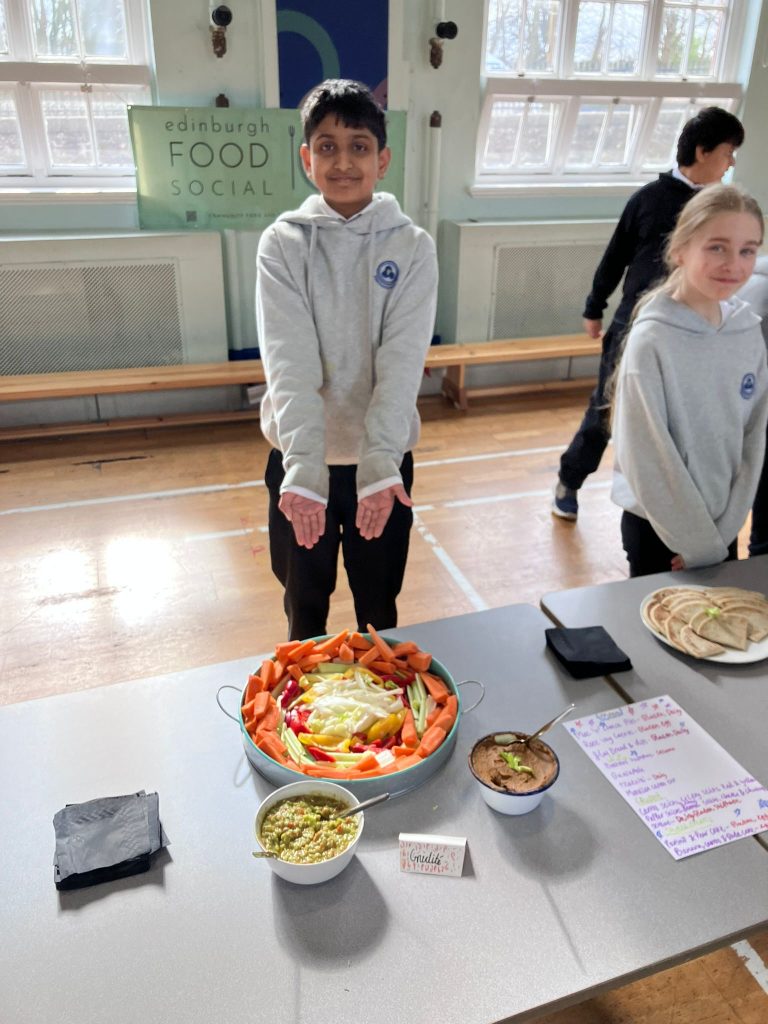
One proud chef!
This spring, our chefs spent six weeks at Prestonfield Primary School, working with the school’s Primary 7 class on a cookery and food education programme. Spending several weeks with the same group gives us the opportunity to build skills gradually, revisit techniques and introduce more challenging recipes (and a few funky ingredients!) as confidence grows. It also gives us time to build trust with the pupils, creating an environment where they’re more willing to have a go, make mistakes and try foods they might otherwise be nervous about. We knew this would be a great project because every time we go into a primary school, we all have a lot of fun (watch this video from Niddrie Mills earlier in the year)
Together we cooked, baked, tasted, wrote recipes and shared a community meal with family, friends and staff. Like all of our school programmes, we began with a simple question: What do you like to eat?
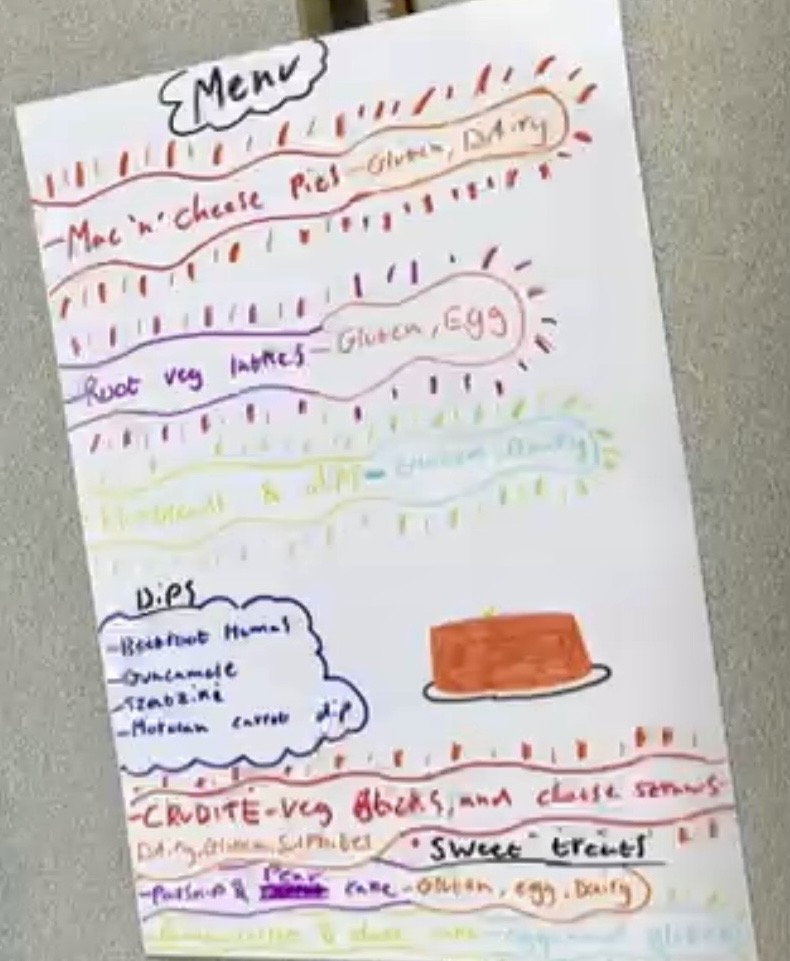
One answer came up again and again: macaroni cheese. So we used this much-loved favourite to teach one of the fundamental building blocks of cooking: how to make a cheese sauce from scratch. The pupils learned how to make a roux before gradually whisking in milk to create a smooth white sauce, finishing it with mustard and mature cheddar for that classic mac and cheese flavour. They were all surprised by how much fun they had! Then came our secret ingredient: steamed celeriac! The young chefs had a great time steaming and whizzing this vegetable (which was new to a lot of them!) into a purée before stirring it through the sauce, adding extra creaminess, and of course another portion of vegetables. We also explored how the very same white sauce forms the basis of countless dishes (including class-favourite cauliflower cheese) before combining everything into a big dish of cauliflower, broccoli and macaroni cheese. From there, the class moved on to pastry-making, learning how to make wholemeal shortcrust pastry from scratch before transforming their filling into individual macaroni cheese pies. The pies were frozen ready to be served at the programme’s final community meal, giving pupils the chance to cook for other people as well as themselves and learn a little bit about planning ahead for these kind of events!
Over the following weeks, each session introduced a different set of skills while encouraging pupils to become increasingly confident and independent in the kitchen. One week celebrated seasonal vegetables, with pupils making crispy potato, carrot and celeriac latkes alongside a beautifully spiced parsnip and pear cake. Unsurprisingly, there was some scepticism when we announced we were making cake with parsnips. But once we reminded everyone that carrot cake is also made with a sweet root vegetable, curiosity soon won over. By the end of the session, many of the young cooks were surprised by just how delicious it was. Another class explored foods traditionally enjoyed for iftar during Ramadan. Pupils tasted dates and date purée, learned about the role of ghee in baking and made delicate maamoul – buttery biscuits filled with sweet dates. Their baking was then served at the school’s community iftar meal later that evening, giving the class the opportunity to contribute to an important celebration within their school community.
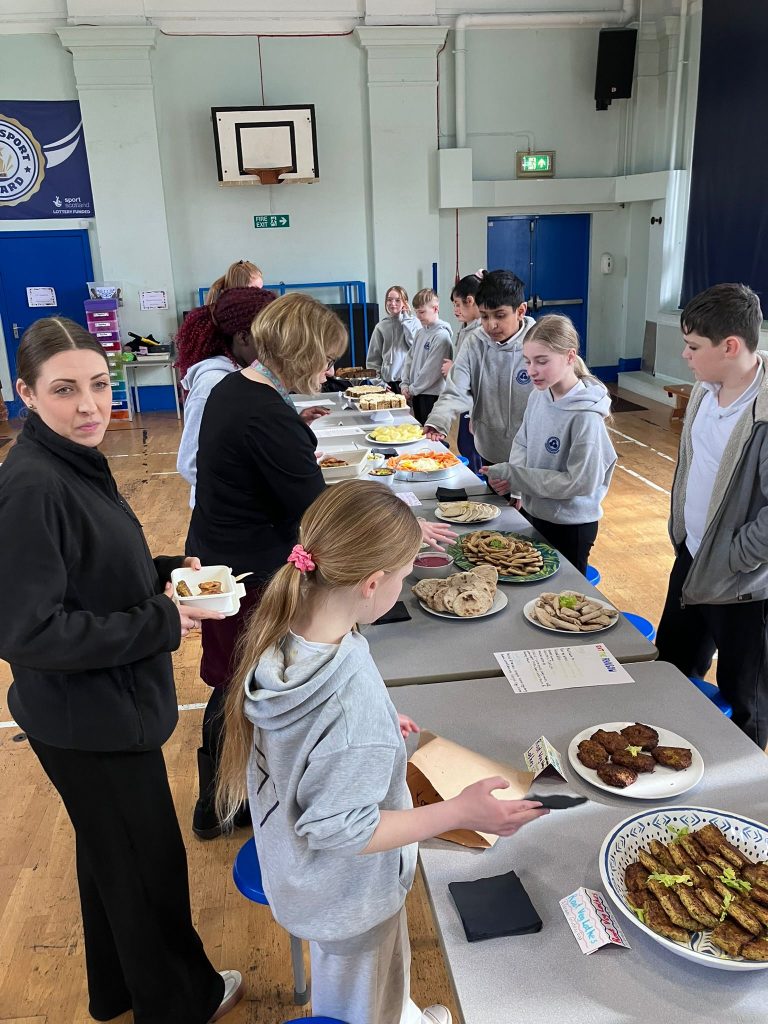
The children loved talking about the food as they served it.
While half of the class cooked each week, the other half had an equally important role. Using the notes they’d taken during each session, they learned how to write clear, easy-to-follow recipes that could be used in future enterprise projects and eventually become part of a school cookbook. By the end of the programme, the pupils had learned far more than a collection of recipes. They had developed confidence using knives safely, making sauces, pastry and bread from scratch, discovered unfamiliar ingredients, explored different food cultures and gained a better understanding of how fresh, seasonal ingredients can be transformed into delicious meals. The project culminated in a community meal where the young cooks prepared, presented and served yummy plates of food to members of their local community. It was a chance to celebrate everything they had achieved while experiencing what a job in hospitality might look like.
Over six weeks we watched pupils who were hesitant to chop vegetables or taste unfamiliar ingredients become confident, curious and proud of what they had created. But it wasn’t just the pupils who benefited from our time at Prestonfield Primary. After spotting the school’s beautiful courtyard garden and hearing about its apple and plum trees, we realised there was another opportunity to share some practical food skills – this time with the teachers. Prestonfield Primary has a courtyard with raised beds and fruit trees that produce apples and plums every year. While growing food isn’t our area of expertise, making the most of a good harvest certainly is. With around ten members of teaching staff, we spent an evening exploring practical preserving and fermentation techniques that can help reduce food waste and make seasonal produce last well beyond autumn. Together, in one class, we made a classic apple and onion chutney, demonstrated how to create a plum jam using the school’s own fruit later in the season, explored lacto-fermentation by making sauerkraut, and learnt how to hot-pickle carrot ribbons and onions.
If you’d like to find out more about bringing one of our programmes to your school or community, we’d love to hear from you.
Explore our projects, browse our cookery classes, or get in touch at hello@edinburghfoodsocial.org to start a conversation.
