
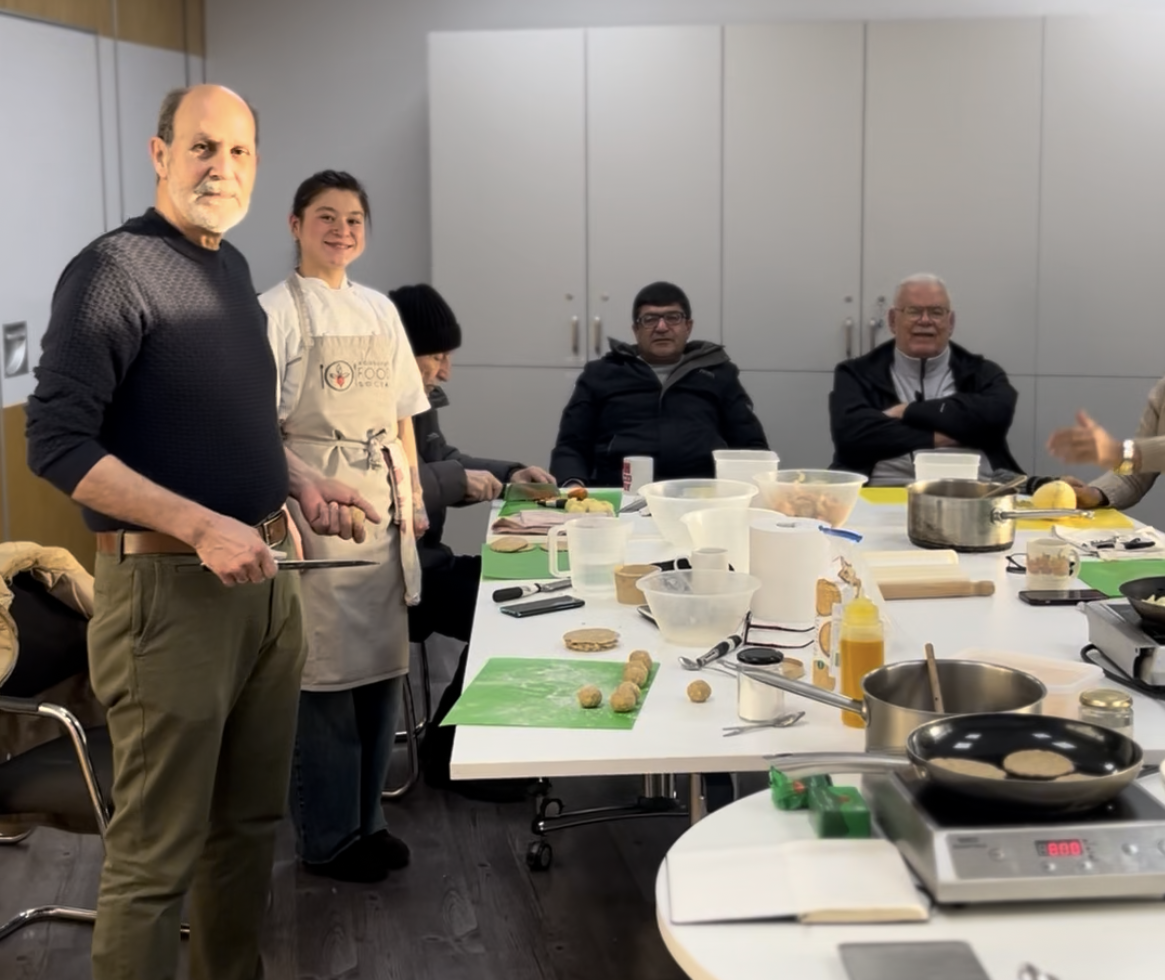
One Wednesday a month, a group of Syrian men come together at the Hays Community Centre to practise their English and cook side by side. Over the years, this group has connected with EFS in different ways, growing and changing as new families arrive and others move on. At the start of 2025, we began running monthly cooking-and-conversation sessions together, hoping to create a relaxed space to learn new words, share food and spend time with neighbours in an easy-going environment. This was our plan, but the truth is we had no idea what to expect or whether these men would be interested in attending our cooking classes.
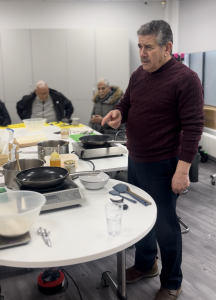
Engaging in some healthy debate over cooking methods!
At the very first session, our chef arrived with bags bursting with ingredients, ready to cook… only to discover he’d been completely outdone. The tables were already filled with bright bowls of fattoush, crisp kibbeh, strong black coffee and, of course, baklava. The food was ready before we’d even started. It was such a generous and happy welcome, and a reminder that these sessions would always be about sharing, not teaching from one direction.
We began the class (officially) with handmade pasta. Dough was kneaded by hand, shaped and passed around the table. Many of the men spoke about their love of baking, and we discussed where to buy different types of flour as we stretched long sheets of pasta and cranked them through the machine. Sometimes it’s easy to forget that cooking skills aren’t just about knowing how to hold a knife or use an oven: we also have to understand where to buy produce and how to ask for specific ingredients, which can be embarrassing for those for whom language is a barrier. We talked about this a little as we made a fresh pesto from scratch and chopped up salad plates of tomato, cucumber and parsley.
As we cooked, new words popped up for everyone. Phrases, instructions and ingredients were written large across the whiteboard, English was swapped for Arabic, then back to English again, and techniques were shown and explained until everyone felt confident. One of our chefs later reflected that ‘food really gets these men talking’ — the kitchen felt like a really safe space, with everyone learning from one another without any pressure. He also added that ‘the relaxed atmosphere makes for such a good learning experience’ something we could all feel as the session unfolded.
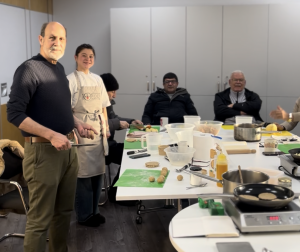
Making homemade oatcakes
The following month, we decided to introduce something very British: raspberry jam and soda bread. Jam was easy enough, preserving fruit is a method used all over the world. Soda bread, though, caused a bit more debate. A wet dough? No kneading? No resting? Surely not. One of the men demonstrated how his wife prepares dough at home, mixed by hand and then tucked into her apron to rest as she went about her daily chores in the house.
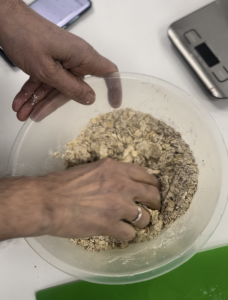
Head-kneading oats and flour to make a dough
Although there was some scepticism at first, the group gave the soda bread their best go. In the end, warm toast and freshly made raspberry jam won everyone over. Try the recipe they used here. As one of the community centre staff put it later, ‘they have really come alive in these sessions,’ especially when there’s food to share at the table.
Before long, the group was confidently making requests, and seafood was coming up again and again. So we planned a class with them, making the most of local Scottish ingredients. The group made fishcakes, which they shaped by hand before shallow frying and serving with homemade tartare sauce. New flavours were tasted, discussed, compared and enjoyed. We talked a lot about fishing in Scotland, and what fish are native to our seas.
We’re so grateful to everyone who has shared their time, their stories and their cooking skills at these sessions, we’ve learned so much from these groups of men, and it’s been amazing to see the progress that they have made with their language and confidence in the kitchen.
