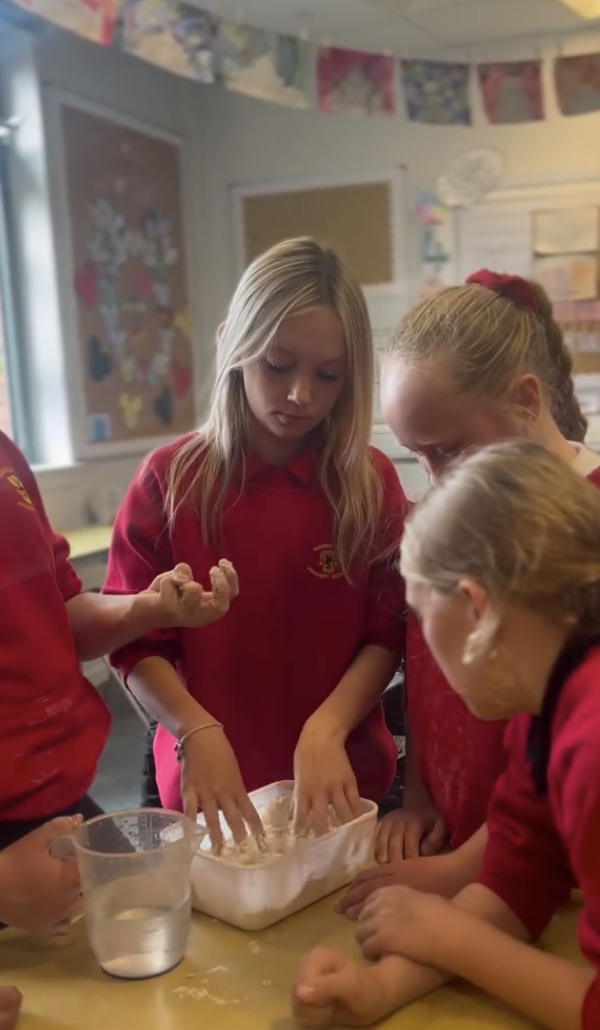
In October 2025, we began running weekly cookery classes with P7 pupils at Niddrie Mill Primary School. Over 12 sessions, two of our chefs cooked alongside up to 15 pupils each week, ensuring that all 58 children across the two P7 classes had the chance to take part. That’s a lot of little hands learning to chop, stir and flavour new types of food.
This group of primary-aged chefs were curious, enthusiastic and willing to try just about anything we presented them with. Across the sessions, pupils built confidence in the kitchen while learning essential cooking skills and exploring new ingredients. Alongside cooking, they spent time writing their own recipes and flicking through cookbooks together, deciding what they’d like to prepare and share at the end of the block. This was in part inspired by a project from earlier in the year with the Craigmillar Literacy Trust.
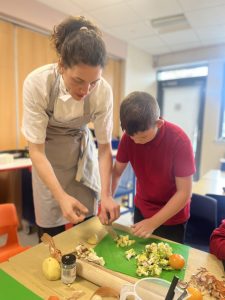
Knife skills last a lifetime
We all grow up with very different food experiences. For many children, cooking with a wide range of fresh ingredients simply hasn’t been part of everyday life. Some of the young people in this group tasted fresh orange for the very first time during one of our classes; it was a small moment, but one that says a lot about why food education matters in communities like these.
We always end our six-week school cookery blocks with a community meal, planned and cooked by the participants themselves. For this group, we decided to extend that meal to friends and families. Niddrie Mill Primary adjoins St Francis RC Primary School, and pick-up time is always busy — an ideal moment to serve food from an outdoor stall.
Over the weeks, the group made everything from curry and flatbreads to sweet and savoury flapjacks, Vietnamese summer rolls, smoothies, blueberry muffins, kimchi, salads and a classic “use-up-leftovers” frittata. Pizza came up again and again as a favourite food, so for the final meal we adapted our very first flatbread recipe into pizza slices to hand out at the stall.
Throughout the programme, pupils learned practical knife skills like the bridge and claw techniques, helping them chop fruit and vegetables safely and confidently. Alongside this, there were plenty of food facts, kitchen hacks and opportunities to taste as they cooked.
A big focus of the final meal was encouraging everyone to eat the rainbow. Pupils prepared generous trays of crunchy crudités — raw vegetable sticks just like they’d been tasting each week — alongside vibrant dips including hummus, a beetroot borani-style dip and a spiced roast carrot dip. While we chopped, we chatted about the benefits of learning to cook from scratch, and the young people’s thoughts on why it’s worth learning to cook from a young age. One young person wisely stated: “it’s good because then you know how to cook, ‘cause otherwise you’d waste all your money on takeaways when you’re older”.
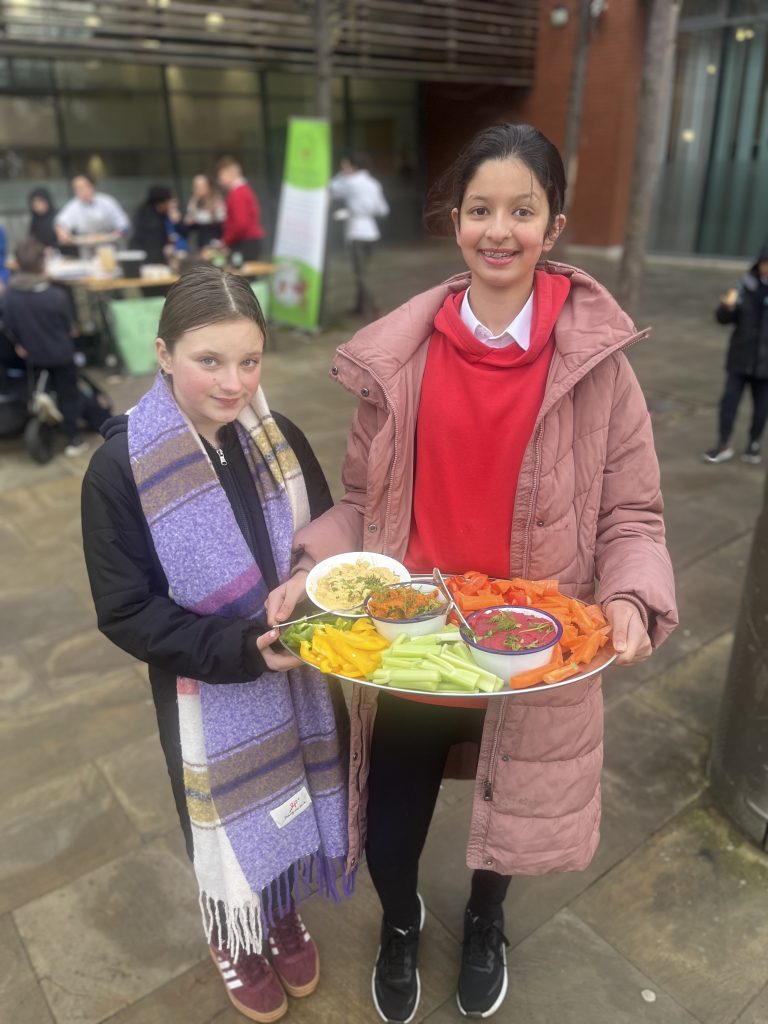
Eat the rainbow!
Families were also invited to take home a seasonal veg box to encourage some creative home cooking. The boxes included mushrooms, brussel sprouts, potatoes, carrots, parsnips, onions, broccoli and chilli — with some ingredients completely new to the households receiving them. To go with the veg, pupils proudly handed out the recipe cards they’d written themselves, sharing ideas and inspiration for cooking the ingredients at home.
The young cooks, recipe writers, sign-makers and market stallholders did an incredible job. We hope they feel proud of what they achieved — not just the food they cooked, but the confidence, curiosity and teamwork they showed along the way.
One member of the community summed it up perfectly: “This is what REAL education looks like!”
Even small moments of learning can build skills that last a lifetime. Many of us can still remember things we learned at primary school through hands-on, creative projects with visiting educators. Our hope is that the memories, confidence and practical cooking skills built during these sessions continue to shape how these pupils cook, eat and share food for years to come.
If you’re able, please consider supporting our food education work so we can keep running projects like this into 2026 and beyond.
