

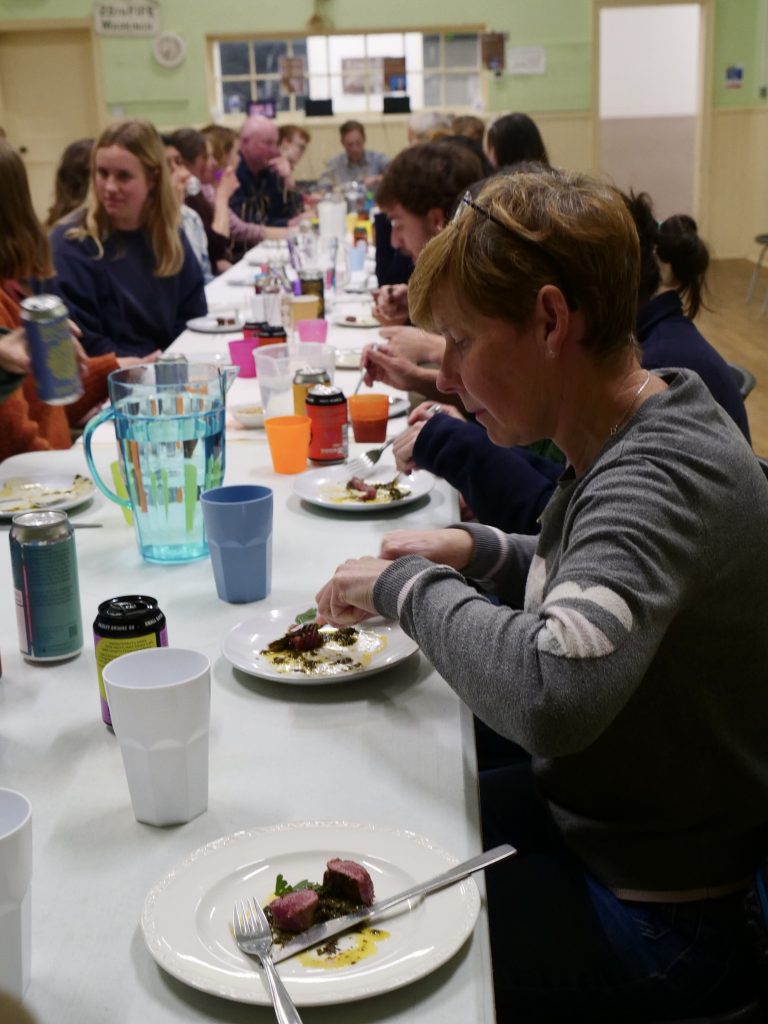
The table was full of local farmers, growers and environmentalists!
What does it really mean to eat locally? For us at Edinburgh Food Social, it means more than sourcing ingredients from nearby farms every now and then. It means understanding where our food comes from, meeting the people who grow and produce it, and celebrating the connections between food, land and community. There’s been a lot of discussion recently about where our food comes from, who gets to enjoy the best of it, how much we should be paying, and how much of that money actually goes to the people who make it. We explored some of these questions in our thoughts on the supermarket price cap.
On 17 October, we were delighted to collaborate with the Forth Rivers Trust and the Catchment Collective to cater an evening meal marking the culmination of the Catchment Festival, a series of events exploring what it means to be part of a shared catchment area. Bringing together people from across the area, the evening was an opportunity to celebrate the communities, growers and farmers who help shape the local food landscape, with a meal that brought their contributions together around one table. When the team first approached us, they had a lovely idea: to create a meal using, as far as possible, ingredients sourced from farmers and growers within the Leven Catchment.
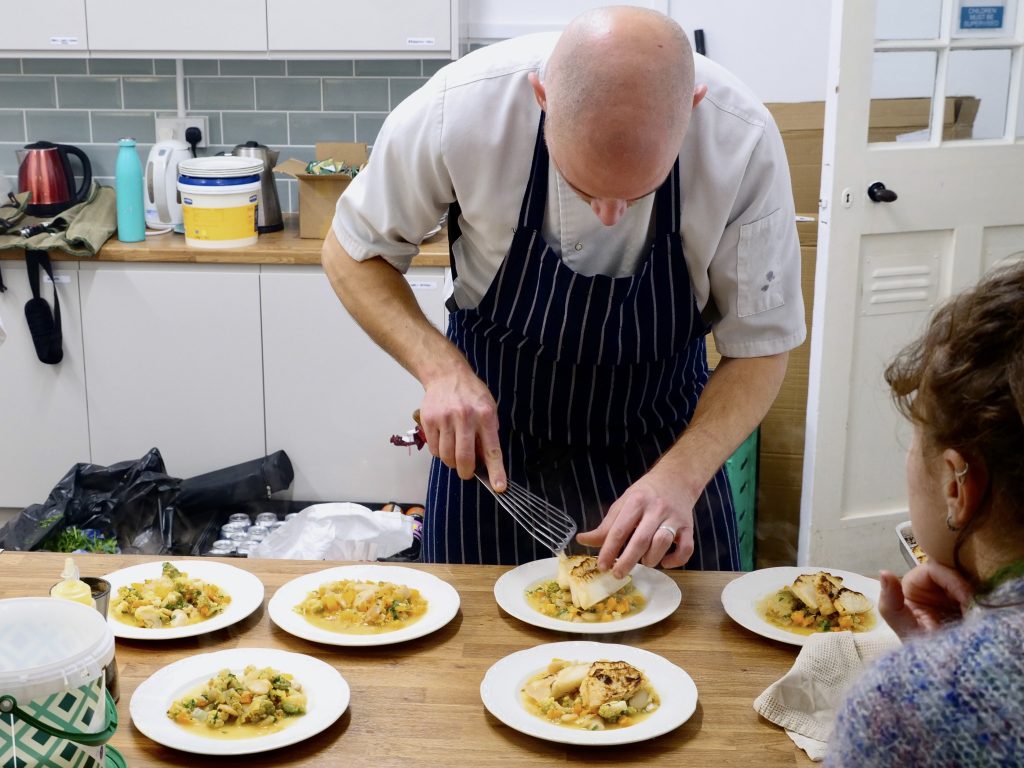
Serving up locally grown celeriac
Rather than starting with a set menu and sourcing ingredients to match, we were given a list of what was available and challenged to build a menu around it. This is an approach we love at Edinburgh Food Social, where seasonality, sustainability and making the most of our ingredients are central to how we cook. These principles run through everything we do, including our sustainable event catering, where we work with clients to create thoughtful menus that celebrate local produce and minimise waste. At this event, the list included everything from lamb and fava beans to purple sprouting broccoli, chard, squash, apples and beetroot. We worked with the ingredients available to create a menu that celebrated local produce while making sure there was something delicious for everyone. As with any event built around seasonal and locally sourced ingredients, flexibility was key. When the lamb we’d originally planned to serve was no longer available, we adapted the menu, switching to flat iron steak. For our vegetarian and vegan guests, we chose celeriac over cauliflower to accompany the fava bean casserole, making the most of another seasonal ingredient.
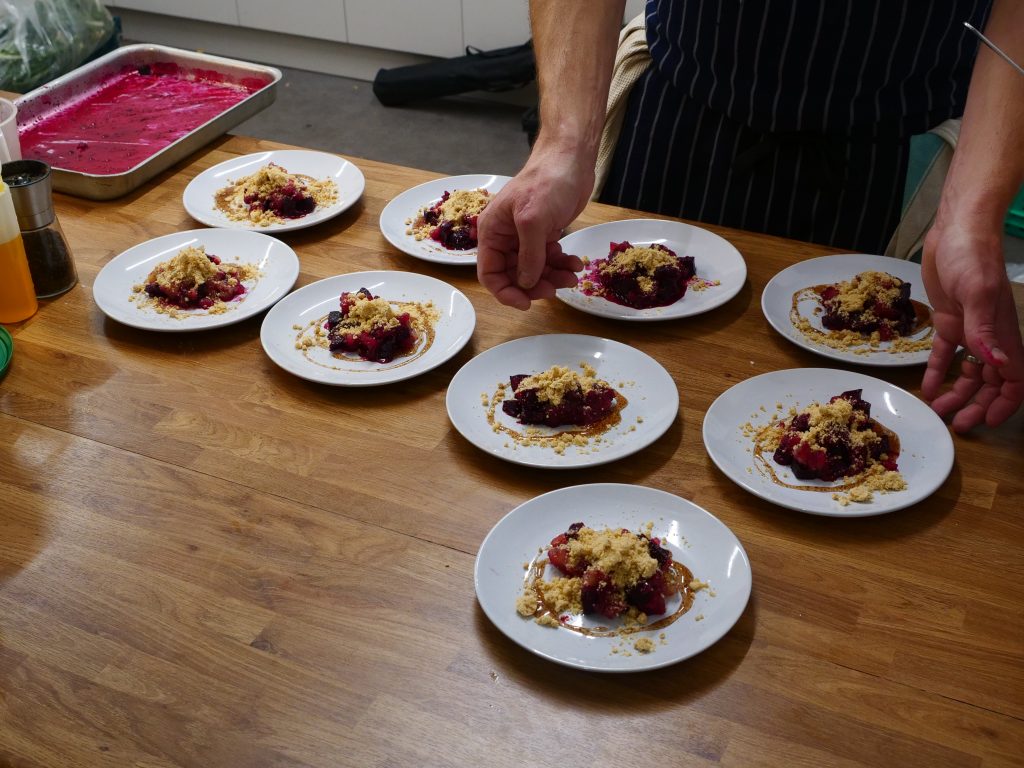
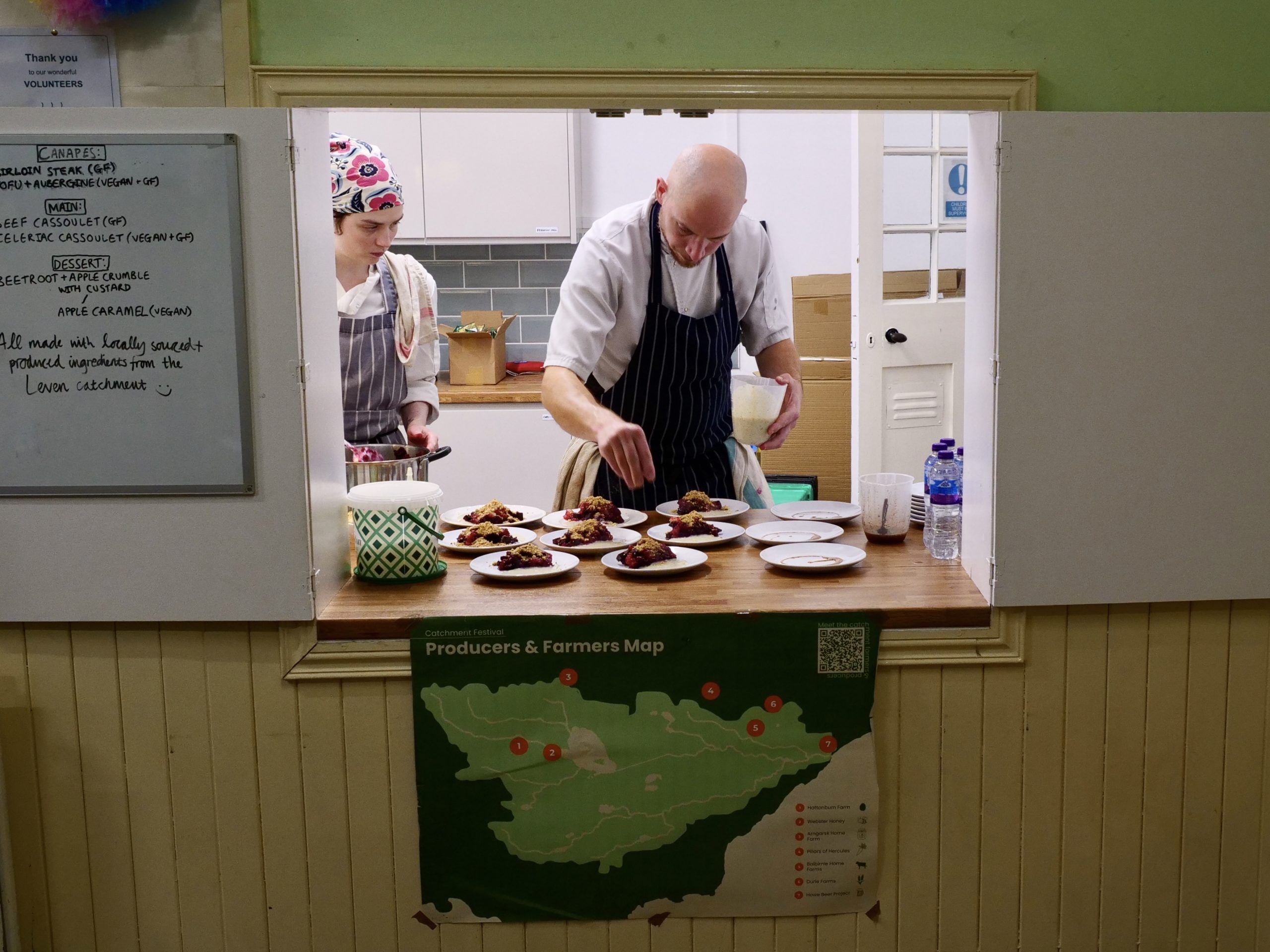
Beetroot and apple crumble, lemon balm custard, apple skin caramel
It’s a good example of why we’re passionate about this style of cooking. Working with what’s available encourages creativity, reduces our reliance on ingredients travelling long distances and allows us to celebrate the produce that is right for the season. The evening’s menu began with canapés of steak with chimichurri, made using Scottish rapeseed oil, alongside a vegan option of crispy aubergine and tofu with chimichurri. For the main course, guests enjoyed flat iron steak with a fava bean casserole and seasonal vegetables. The vegetarian and vegan alternative featured celeriac with the same hearty casserole, bringing the different elements of the meal together.
Dessert was a celebration of autumn produce: apple and beetroot crumble served with lemon balm custard. We wanted to make the most of the ingredients available, including using by-products wherever possible. The crumble topping combined almond flour with gluten-free flour, while our vegan dessert option featured an apple-skin caramel made using the skins left over from preparing the apples. Finding creative ways to use ingredients that might otherwise go to waste is a small but important part of our approach to sustainable cooking. For more ideas on tackling food waste, you can explore Zero Waste Scotland’s food and drink resources.
The lemon balm custard was another highlight. A local gardening enthusiast had generously donated fresh lemon balm, which we used to infuse the sugar and create a fragrant, citrusy custard. It was a lovely example of how contributions from the local community can become part of something much bigger.
One of the most rewarding parts of the evening was meeting some of the people who had helped make the meal possible. Many of the guests had contributed to the event in some way, whether by supplying ingredients, supporting the festival or helping bring the community together. We met the women who had supplied the beef, alongside other local farmers and growers, and heard more about the work taking place across the catchment.
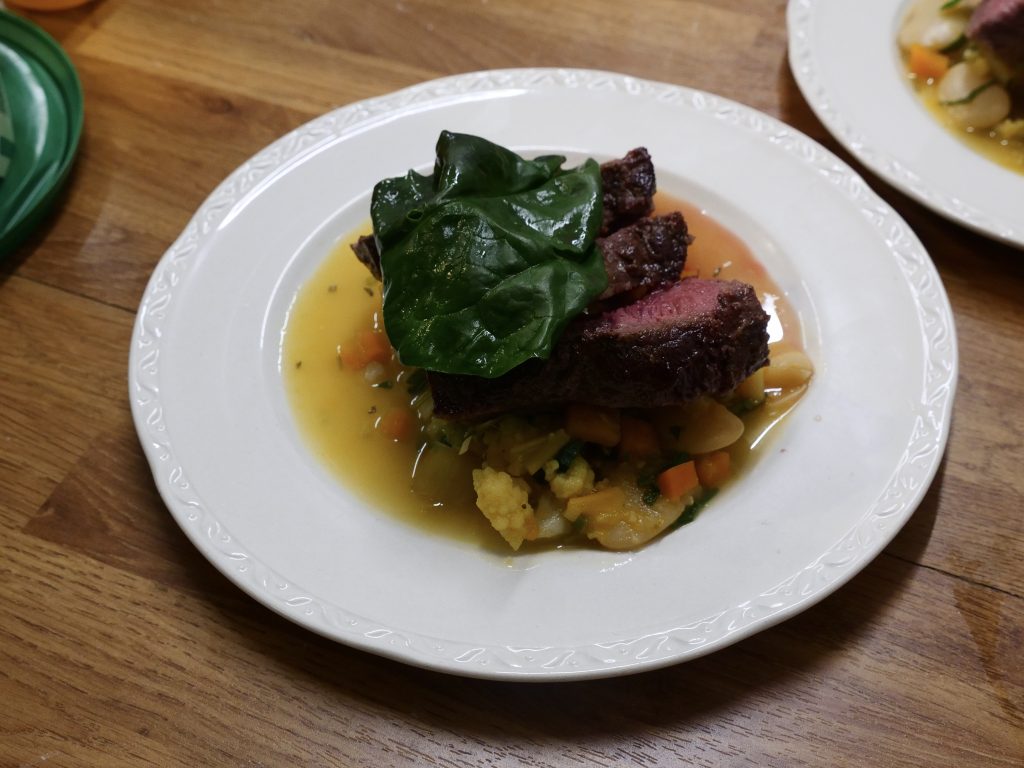
Steak from a very very nearby farm
Events like this give us the chance to step outside our own kitchen and become part of a wider conversation about how we produce, source and share food. Cooking for around 50 people in a community hall brought its own challenges. We prepared everything on site, working in a relaxed but fast-paced environment (without a dishwasher!). Our team had to adapt to the facilities available, organise the kitchen efficiently and keep everything running smoothly from preparation through to service. It’s a familiar part of catering, but it also reflects something important about our approach: good food doesn’t need a perfect kitchen or an elaborate set-up. With skilled chefs, thoughtful planning and great ingredients, it’s possible to create a memorable meal in all sorts of settings. Collaborations like this are a reminder that those values extend well beyond our own kitchen. By celebrating local produce, supporting the people who grow our food and finding creative ways to use what’s available, we can help build stronger connections between food and the communities around it.
Thank you to the Forth Rivers Trust, the Catchment Collective, the local farmers and growers, and everyone who helped bring the evening together. It was a pleasure to be part of such a thoughtful celebration of the Leven Catchment.
