
When packaged snacks, ready meals and convenience foods dominate our diets, it’s hard to imagine how much that can actually impact our lives — over time we risk losing our health, our ability to cook, our creativity, even our basic food knowledge. Food has become something that arrives packaged and fully formed, and we often consume it without stopping to consider what is inside. Ultra-processed foods (UPFs) are now ubiquitous, yet many of us remain unaware of the additives, preservatives and emulsifiers we are eating daily.
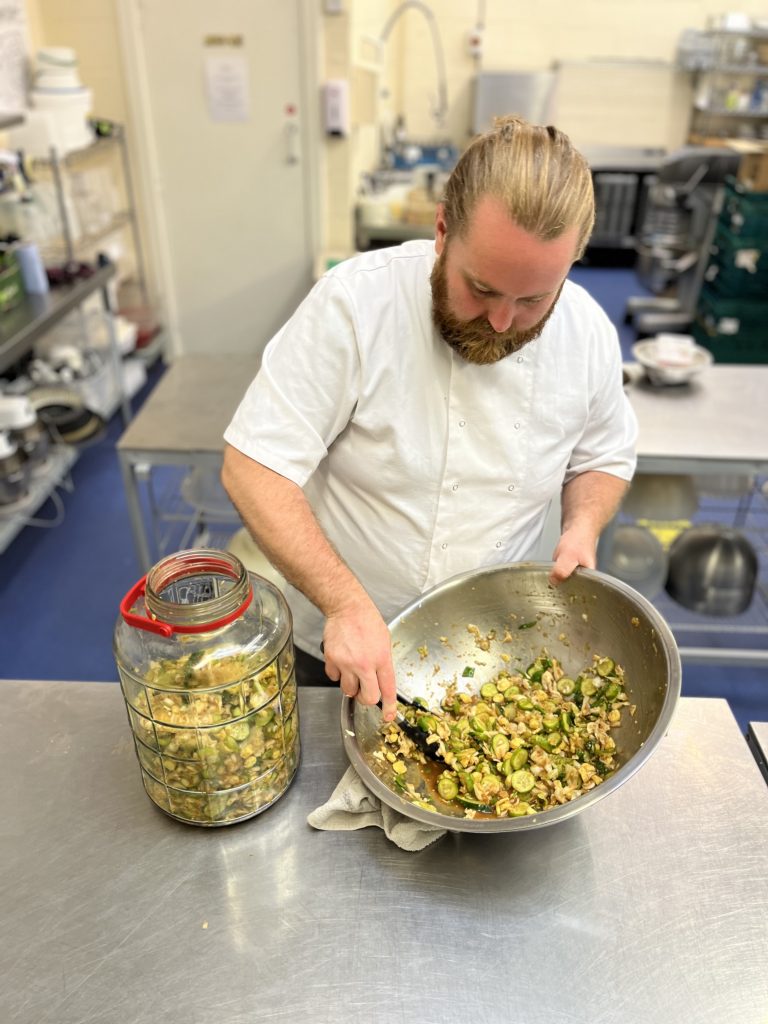
Making kimchi from scratch
Here at Edinburgh Food Social, we have always been interested in the impact of UPFs and work to weave this awareness into our programmes. Recently, in a class with high school students from Castlebrae Community Campus, we asked what they most often eat for lunch. The top answer? Kimchi-flavoured instant noodles. Instead of lecturing, we taught them to ferment their own spicy kimchi to add to homemade noodles; a way to bring flavour, fibre and probiotics into their diets.
High in UPFs are linked to damage across every major organ system, with significantly increased risk of conditions including obesity, type 2 diabetes, heart disease, depression and early death. In the UK (where more than half of the average adult diet now comes from UPFs) these findings are particularly relevant. We know that understanding what we eat, and learning how to cook with whole foods, can have a transformative impact on physical and mental health: empowering individuals to make long-term changes to their relationship with food and cooking.
Our cookery classes are grounded in whole ingredients and simple techniques that make UPF-free cooking achievable every day, not just as an occasional effort. In Fun With Flour, for example, participants learn to bake bread, make pasta and handle dough from scratch. This class highlights just how little is needed to make real bread compared to the long ingredient lists found on packaged supermarket loaves. Our Scottish Mezze workshop takes the same whole-food approach, showing how dips, salads, spreads and shared plates can be made quickly from fresh, local produce instead of relying on shop-bought versions filled with stabilisers and preservatives. These are not niche or advanced techniques, but accessible, repeatable methods that help participants understand what goes into their food, and, importantly, what doesn’t need to.
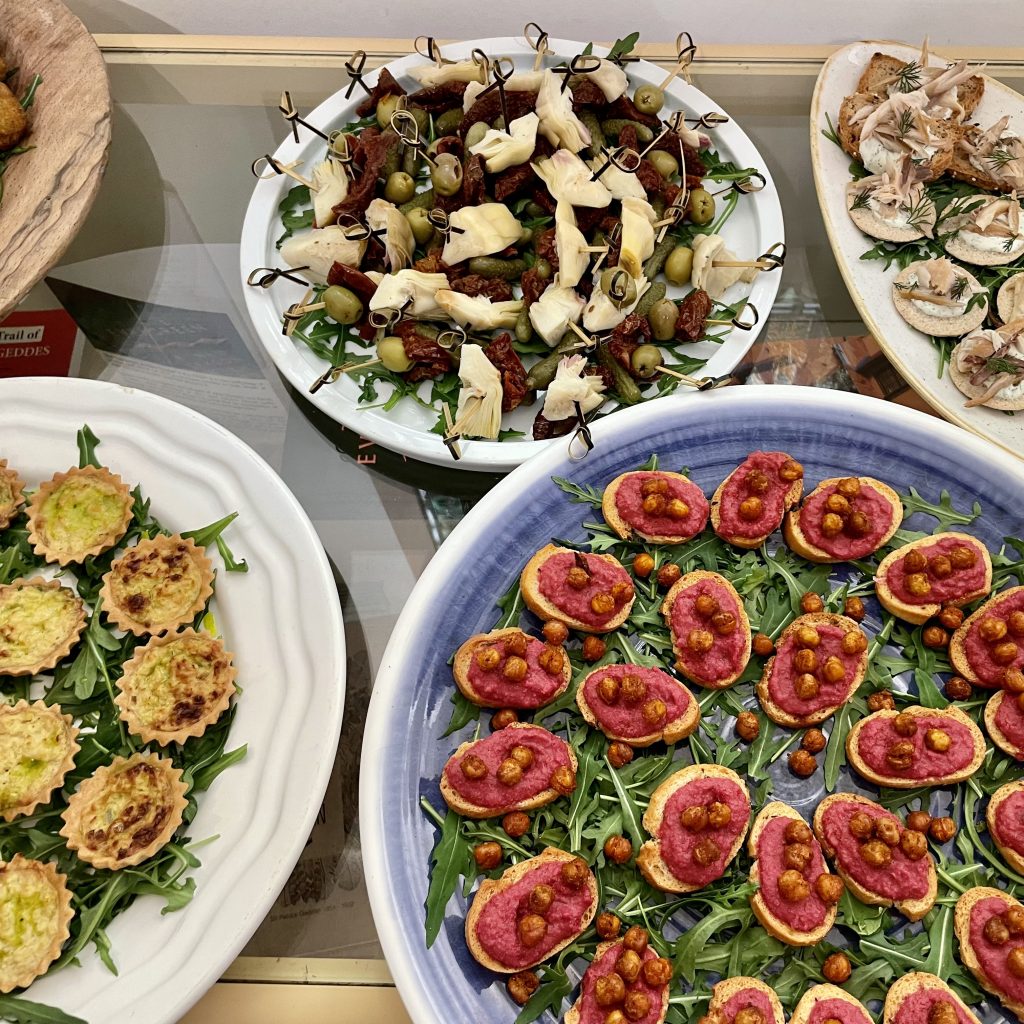
Homemade festive canapés
Recently, just up the road at Castlebrae Community Campus, one of our team members was working with ESB pupils to prepare and serve homemade festive canapés at the annual School Christmas Concert. The menu included apricot sausage rolls, roast vegetable frittata bites, and brie and cranberry pastry swirls. Every canapé was made entirely by the students, showcasing how accessible whole-foods cooking can be with the right skills and support. It’s easy to reach for the frozen aisle when catering for Christmas events, but this year we watched young cooks discover just how satisfying and simple it can be to make it themselves.
As the evidence around UPFs becomes harder to ignore, building communities who can cook, share and understand food feels like one of the most powerful tools we have. Cooking from scratch doesn’t need to be complicated, and apart from being healthier, it also inspires real passion and confidence in people: it’s so much more satisfying to serve a bowl of soup and homemade bread to a friend for lunch than it is to simply open a packet. Real food takes a bit more time, but it also gives something back. But don’t just take our word for it – watch this interview with some of our class participants to find out how attending our community classes has impacted their relationship with food and cooking.
